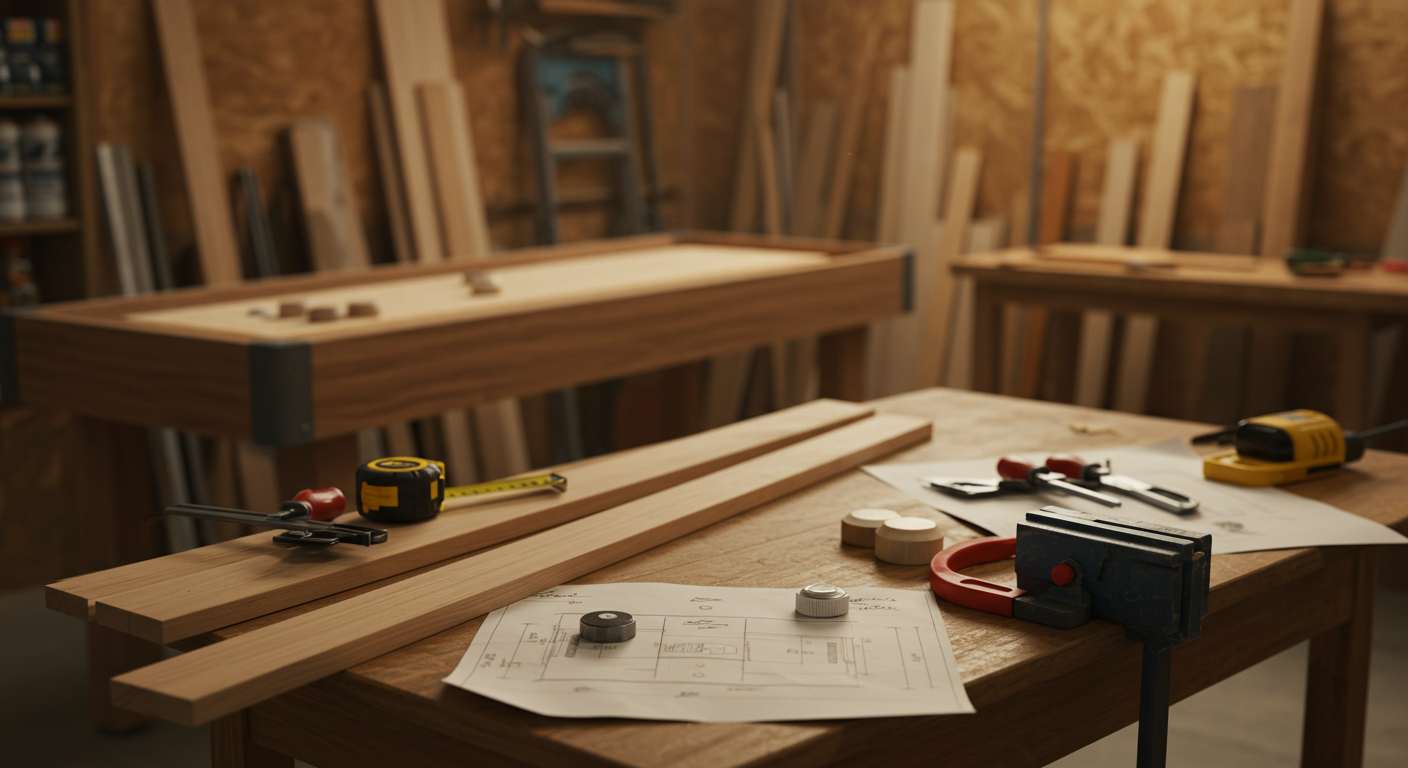
Looking to add a fun, timeless game to your home without breaking the bank? Building your own shuffleboard table is a rewarding DIY project that blends craftsmanship with recreation. Whether you're a weekend woodworker or a seasoned DIYer, this guide walks you through every step—from initial planning to the final polish.

A DIY shuffleboard table means custom design, major cost savings, and the satisfaction of building something beautiful and functional with your own hands. Ready to get started? Let’s break it down.
Building your own shuffleboard table starts long before you pick up a single tool. It begins with a vision. This is where you lay the groundwork for your project—choosing a design that reflects your personality, fits your space, and supports how you’ll actually use the table. And trust me, getting this part right makes everything else smoother.
This is the fun part—imagine your shuffleboard table as the centerpiece of your game room, basement, or garage. What does it look like?
Do you lean toward that vintage tavern charm—think rich, dark wood, chunky legs, and a timeless feel? Or are you all about modern flair, maybe with a minimalist frame, hidden lighting, or industrial metal accents? There’s no wrong answer here, just what feels right to you.
Want to make sure your dream design fits your actual space?
Also, think about who will be using the table. If you’ve got younger kids, a shorter length (like 9 or 12 feet) is easier and more accessible. If you’re planning serious game nights or even tournaments? Go big—16 to 22 feet brings that pro-level challenge.
Okay, once you’ve got a style in mind and an idea of the size, it’s time to sketch out the blueprint. Don't worry—you don’t need to be an architect here. Just enough detail to guide your cuts, purchases, and build steps.
Start by asking yourself:
It’s worth spending extra time here. A solid plan means fewer surprises mid-build (and fewer trips to the hardware store!).
👉 Need help choosing materials that won’t warp, chip, or cost a fortune?
Check out: Shuffleboard Table Materials & Finishes Compared
If you’re dreaming of cup holders, scoreboards, or hidden storage for pucks and wax (yes, that’s a thing!), work them into the design now. Retrofits are always trickier—and more expensive—than building it right from the start.
Want to sketch it out digitally? Try free tools like SketchUp or even a simple Google Sheets grid for measurements and layout. Don’t underestimate how helpful a visual reference can be when you’re in the sawdust storm of actual construction.
You can’t build a shuffleboard table with just good intentions—you’ll need the right stuff. But don’t worry! You don’t need a garage full of expensive gadgets or rare exotic lumber. With a solid materials list, a few essential tools, and a little prep, you're ready to roll.

Let’s break it down, nice and easy.
Think of these as the bones and skin of your shuffleboard table. The strength, look, and longevity of your table depend on what you build it with.
Here’s what you’ll typically need:
Wood for the Frame:
This includes the sides, legs, and supports. You can use hardwoods like oak, maple, or ash for a strong and long-lasting build, or opt for softwoods like pine if you're on a budget. Just remember: softwood is easier to work with but more prone to dents.
Playfield Surface (The Star of the Show):
This is where the magic happens—your pucks glide here. Choose solid hardwood like maple or birch. Some folks even use butcher block countertops (yes, kitchen ones!) for a beautiful, smooth finish. Avoid cheap composite wood here—it warps, and warped playfields = frustration city.
Base Support (Substructure):
A sheet of MDF or plywood underneath the playfield provides extra stability. This helps keep the top level over time, especially in changing climates.
Fasteners and Adhesives: You’ll need:
Wood glue
Wood screws
Nails (optional, depending on frame design)
Wood filler for small imperfections
Finish Products:
You’ll want a clear polyurethane, ideally an oil-based one for better durability and gloss. For a glass-like shine, you can go with epoxy, but it’s more finicky to apply. You’ll also want fine-grit sandpaper (like 120 to 220+) for smoothing the surface before and between coats.
Optional but Nice-to-Have:
Felt or rubber pads to dampen sound
Leveling feet or adjustable legs to fine-tune balance
Silicone or wax for gameplay once it’s finished (we’ll cover this more in the maintenance section)
Pro tip: If you're doing this in a humid area or a garage that’s not climate-controlled, invest in moisture-resistant plywood for the sub-base. It’ll prevent warping over time.
You don’t need a workshop worthy of HGTV to build this table. A few basic power tools and some good old-fashioned measuring will get the job done.

Here’s what you’ll need (and why!):
Circular Saw or Table Saw
For straight, clean cuts. A table saw makes this easier, but a circular saw with a straight edge guide can absolutely handle it.
Drill/Driver Combo
Your drill will do double duty—drilling pilot holes and driving screws. Get a reliable set of bits and keep a spare battery charged if you're using cordless.
Clamps (Seriously, as many as you can get)
You’ll need these to hold wood in place while glue dries. It’s not glamorous, but clamps make or break your precision.
Measuring Tape, Carpenter’s Square, and Level
Triple check your measurements. A level ensures you’re not building a crooked table (no one wants a puck that always rolls left).
Orbital or Belt Sander
Smooth wood = smooth puck action. You’ll use this a lot, especially before applying your finish. Don't skip this step!
Paintbrush or Foam Roller
For applying the polyurethane. Foam rollers give a smoother finish with fewer bubbles, but brushes can get into corners more easily.
Optional but handy tools:
Miter Saw: Speeds up clean angle cuts (especially for legs and trim).
Router: If you want to add smooth rounded edges or groove detailing.
Jigsaw: Good for custom shapes or small cuts, like cup holder cutouts.
Before you head to the checkout aisle or hit "add to cart," take a moment to double-check your list against your design. Planning saves time, money, and mid-project headaches.
This is where your vision turns into reality! You’ve got the materials, the tools, the plan… now it’s time to roll up your sleeves and start building. Don’t worry—take it one step at a time. This isn’t about perfection. It’s about progress, patience, and having a blast along the way.

The frame is the foundation of your shuffleboard table. Think of it as the skeleton that holds everything together. A strong, square frame = a level, long-lasting table.
Here’s what you need to do:
Measure twice, cut once. Seriously. Start by cutting your side rails and end pieces (called end caps). If your playfield is 12 feet long, your frame should be just a few inches longer to allow for rails and overhangs.
Use strong, straight wood. Avoid warped boards. Lay each one flat on the floor at the store if needed. If it rocks or twists, skip it.
Assemble the outer frame. Apply wood glue at each joint, then reinforce with screws. Pre-drill your holes to avoid splitting the wood.
Add internal supports. Every few feet, insert crossbeams or braces underneath. These prevent sagging and make the frame sturdier—especially important for longer tables!
Quick tip: Use corner clamps or a framing square to keep those corners nice and square. Crooked frames can be fixed later… but why make it harder?
Now for the heart of the table—the playfield! This is the surface your pucks will slide across, so it needs to be smooth, solid, and level.
Choose a good wood. Hardwood like maple or birch works great. Look for something that won’t dent easily and resists warping over time.
Plane it flat. If you bought a butcher block or pre-glued panel, you’re in luck—it might already be level. Otherwise, you can use a planer or sanding blocks to smooth it out.
Sand it smooth. Start with a medium grit (around 120), then work up to a fine grit (220+). Run your hand across it. Feel anything? Sand it again!
Check for level. Use a long level or a straight edge to ensure the surface is even from end to end and side to side. Adjust with shims or plane it down if needed.
Secure it to the frame. You can use L-brackets, cleats, or a tight-fitting cradle inside the frame. The key is: don’t glue it permanently—you want the wood to be able to expand and contract slightly with temperature changes.
Pro tip: Let the wood acclimate to your room for a few days before installing. It helps avoid warping later.
Rails and end caps give your table its final shape—and keep those pucks from flying off!
Install the side rails. These go along the length of your playfield. You can use padded bumpers, foam strips, or just solid wood rails for bounce control.
Check spacing. Leave a small gap between the rail and the playfield to give the puck just enough breathing room. Too tight? You’ll get frustrating bounces.
Add the end caps. These close off the table at both ends. Want to go next-level? This is a great spot to add cup holders, a puck return tray, or even built-in speakers. (No joke—I’ve seen it!)
Use a level (again). Make sure everything is aligned. A slightly crooked rail won’t ruin your game, but it’ll feel off.
Fun tip: Want to add a personal twist? Stain or paint the rails in a contrasting color to the playfield for a bold look.
This is where your table transforms from raw wood to smooth, glassy game surface. Take your time—it’s totally worth it.
Final sand. Go over every inch with 220-grit sandpaper. For an ultra-smooth finish, wipe with a damp cloth, let it dry, then sand again (this raises the grain slightly so it’s easier to smooth out).
Clean thoroughly. Dust is the enemy of a great finish. Use a tack cloth, vacuum, or slightly damp rag to get rid of all particles before applying anything.
Apply your finish. You’ve got two solid options:
Polyurethane: Easy to apply, durable, and dries hard. Do 3–5 coats, sanding lightly between each.
Epoxy: Creates a thick, glass-like surface, but it’s trickier to apply. Be sure to follow instructions carefully and pour in a clean, dust-free environment.
Let it cure fully. Don’t rush this. Some finishes feel dry to the touch in a few hours, but need days to fully cure. Patience = a better table.
Almost there! This step is all about putting it together, testing it, and making those final tweaks that make your table play like a dream.
Double-check the level. Even if everything looked great earlier, the full assembly can shift things slightly. Use a level in multiple spots—end to end, side to side, and diagonally.
Adjust legs if needed. Add shims or install adjustable feet to fine-tune it. This makes a huge difference in gameplay.
Add scoring zones. Use decals, paint, or wood inlays to mark off the scoring sections. A typical layout includes 1, 2, and 3-point zones at each end.
Install your scoreboard. Whether it's a chalkboard, magnetic tiles, or a digital display, this gives your table a finished, game-ready look.
Final tip: Slide a puck down the surface. Watch how it moves. If it veers or stops short, recheck for dust, uneven finish, or table tilt. Fine-tuning this step makes the biggest difference in how fun the game is to play!
So you've built your table—or you're just about there. Nice work! Now comes the really fun part: making it yours. Customizing your DIY shuffleboard table isn't just about aesthetics (though that's a big part of it); it's about turning your build into something that reflects your personality, fits your space, and amps up the fun.

You’re not just building a game table. You’re creating an experience. One that people will gather around, talk over, cheer at, and remember. So let’s dive into ways to make it unforgettable.
Here’s your chance to inject soul into your table. You don’t have to be an artist or designer to make it look awesome—just intentional. A few smart details can make it go from “cool DIY project” to “wow, where’d you get that?!”
Try these simple, high-impact ideas:
Monogram It or Brand It:
Burn or carve your family initials, a favorite quote, or even a team logo into the wood. You can use wood-burning tools, stencils with paint, or get a laser-engraving service to do the job for you (many local makerspaces offer this). It adds a personal signature that makes your table truly one-of-a-kind.
Play With Stains and Colors:
Wood doesn’t have to be boring beige. Use stain to bring out natural grain patterns—go dark and moody, warm and rustic, or light and beachy. Want to go bold? Try color-blocking with paint or even a two-tone effect (natural wood top, painted legs).
Pick a Theme:
Give your shuffleboard table a vibe that fits your home or hangout space. A few fun theme ideas:
Industrial Loft: Black iron pipe legs, reclaimed wood, matte finish
Retro Arcade: Bright red legs, funky decals, colorful scoring zones
Rustic Farmhouse: Distressed paint, natural wood, hammered hardware
Sports Bar: Team colors, drink holders, scoreboard vibes
Add a Nameplate or Plaque:
Seriously—engraving a little plaque with the year you built it or your family name gives the table a sense of legacy. It might sound small, but it adds a huge emotional payoff.
Okay, now let's talk about the bells and whistles. Functional upgrades don’t just make your table look cooler—they make playing more fun, organized, and even more competitive. Yes, please!

Here are some creative (and useful) upgrades to consider:
LED Lighting (Under the Rails or Around the Base):
Light up your table for nighttime games or just to impress your guests. You can go classic white or wild with color-changing LEDs controlled via remote or smartphone. It’s surprisingly easy to install with adhesive strips!
Built-In Storage (for Wax, Pucks, and More):
Tired of digging around for shuffleboard wax or stray pucks? Add a simple pull-out drawer, hidden cabinet, or even a wall-mounted organizer nearby. Your future self will thank you.
Scoreboards (Manual or Digital):
Keep the competitive spirit alive with a scoring system. Options range from a simple chalkboard or magnetic tiles to sleek digital scoreboards. Some even come with sound effects—yes, seriously.
Cup Holders or Snack Trays:
This might sound minor... until someone spills a drink on your beautiful finish. Add corner cup holders or side trays to keep beverages safe and the game flowing.
Puck Stopper Rails:
If you’ve got excited players (or kids), consider adding clear acrylic or wooden puck guards to the ends to stop pucks from flying off. Safety and sanity.
👉 Want more ideas?
Check out our guide: 10 Essential Shuffleboard Table Accessories You Need — it’s packed with add-ons that can take your table from basic to pro-level.
The best part of DIY is the “Y”—you get to decide how this table fits your space and your style. Don’t be afraid to experiment or do things a little differently. In fact, that’s kind of the point! Some of the coolest shuffleboard tables we’ve seen weren’t perfect—they were personal.
No matter how excited you are to get building (and I get it—who doesn't want to play the first game ASAP?!), it's so easy to overlook the small stuff that can turn into big headaches later. This section is here to help you sidestep the most common DIY trip-ups—so you can build smarter, smoother, and with way fewer "oops" moments.

This one gets people more often than you'd think. You might feel tempted to “guesstimate” your cuts or go off general ideas you saw online. But here's the thing: a shuffleboard table is not forgiving when it comes to size. Off by even half an inch? It can throw off your playfield, rail placement, or even make it impossible to get through your doorway.
Here's how to avoid it:
Measure everything—twice. Your room. Your wood. Your frame. Your cut lines. Write the numbers down, draw them out if it helps, and don’t eyeball anything.
Check your wood before cutting. Boards can vary slightly even if they’re labeled the same size. Always verify the real width and thickness.
Leave space for extras. If you're adding bumpers, lighting, or trim, account for those in your measurements. A tight squeeze now can mean a redo later.
Think ahead to doorways. If you're building this in your garage or workshop, double-check that you’ll be able to move it to its final location. If not, build it in sections or build it in the room itself.
Bonus Tip: Wood expands and contracts with humidity and temperature. Especially if your table’s going into a garage, basement, or anywhere that isn’t climate-controlled. Leave just a tiny bit of room in joints and the playfield cradle for natural movement. It can save you from warping down the line.
Let me say this loud and clear: if your table isn't level, your game won't be fair or fun. It sounds like a small detail, but uneven surfaces make pucks drift, stop short, or fly off completely—and that’s just frustrating.

Leveling tips to keep things straight:
Pro tip: After you’ve leveled everything, test it! Slide a puck down each side of the playfield. If it veers to one side or doesn’t slide evenly, you’ve got some adjusting to do.
You want your table to last, right? And play like a dream? Then the materials you pick—especially for the playfield—are everything. Cutting corners here might save a few bucks now, but it’ll cost you in performance, durability, and time spent fixing issues later.
Mistakes to watch for:
If you're curious about finish types, curing time, or maintenance tips, check out this guide: Shuffleboard Table Finish Restoration: Resurfacing & Refinishing Your Playfield
Final advice? Treat the finish process like a separate project. Set aside a clean, dust-free space and give yourself time. Your future game nights will thank you.
While we're at it, here are a few extra missteps I've seen (and made) along the way:
Everyone makes mistakes when building something from scratch. But the good news? Most of them are easy to avoid once you know what to look for. By planning ahead, taking your time, and learning from other DIYers (hi 👋), you’ll end up with a shuffleboard table that not only looks great but plays great.
And that first smooth puck slide across a table you built with your own hands? Pure magic.
You built it. You love it. Now let’s keep it looking (and playing) like it did on day one! Proper maintenance is what separates a table that lasts years from one that starts to warp, slow down, or look weathered after a few short months. Luckily, with just a little regular care—nothing complicated or expensive—you’ll protect your investment and keep the good times rolling.

Let’s break it down into two parts: taking care of the playfield and maintaining the frame and rails.
This is the business end of your shuffleboard table—the part where all the action happens. It needs to stay smooth, slick, and protected if you want a consistent glide and great gameplay.
Here’s what I do (and what you should too):
Dust, wax build-up, and fingerprints can all mess with how the pucks slide. A quick wipe goes a long way.
This stuff is magic. It’s what gives your pucks that smooth, fast glide. No wax? Expect jerky slides and frustrated players.
Pro tip: Want a faster or slower game? Shuffleboard wax comes in different “speeds.” Faster powder means slicker play; slower blends offer more control. Try a few and see what fits your style!
Even with great care, the playfield will start to lose its shine over time—especially if you’re playing often. You’ll notice scratches, dull spots, or slower slides.
You can reapply a polyurethane coat or, if needed, sand down and start fresh. It’s a bit of work, but totally doable and makes your table look brand new again!
While the playfield gets the most love, the rest of the table needs attention too! That beautiful wooden frame, those side rails, the legs—it all supports your game, and trust me, it’ll show wear faster than you think if you don’t maintain it.
Here’s what we recommend:
Sunlight fades finishes. Humidity warps wood. Your shuffleboard table is not a fan of either.
Even a solid build can shift slightly over time—especially if your floor isn’t perfectly flat.
Over time, even the most beautiful finish starts to fade or show scuffs. That’s okay—just give it a refresh!
If you stained your table a custom color during the build, hang on to the leftover stain—you’ll thank yourself when it’s time to touch things up.
Seriously, it’s worth putting together a little shuffleboard care box. Here’s what I keep in mine:
Having it all in one spot makes cleaning and upkeep feel less like a chore—and more like part of the game!
Maintaining your DIY shuffleboard table isn’t complicated, but it is essential if you want to keep that slick, satisfying slide and showroom shine. A little love here and there goes a long way—and hey, it gives you an excuse to admire your handiwork up close now and then. 😉
Ready to dive deeper into expert shuffleboard upkeep?
👉 Check out the Shuffleboard Table Maintenance: Definitive Guide for all the pro-level tips you’ll ever need.
There’s no denying it—building your own shuffleboard table is a deeply rewarding project. You get to design something from scratch, shape every detail, and step back at the end with a real sense of pride. It’s hands-on, personal, and fun! But let’s be honest… it’s also time-consuming, takes a bit of skill, and not everyone has a fully equipped garage or a few weekends to spare.
And that’s totally okay.
If you love the idea of owning a beautiful shuffleboard table—but the DIY route isn’t quite your speed—you’re not alone. We’ve got your back.
At Game Room Shop, we offer a curated collection of premium shuffleboard tables from some of the most trusted brands in the game. From classic styles to sleek modern builds, each table is built for lasting performance and designed to be a standout piece in your space. No sawdust. No guesswork. Just smooth gameplay, right out of the box.
So whether you’re a passionate builder or simply want the best table without the hassle, the goal is the same: quality time, friendly competition, and unforgettable memories.
Explore our full selection of ready-made shuffleboard tables today and find the one that fits your style, space, and budget—no tools required! Let the games begin!

Meryam Shakoor