

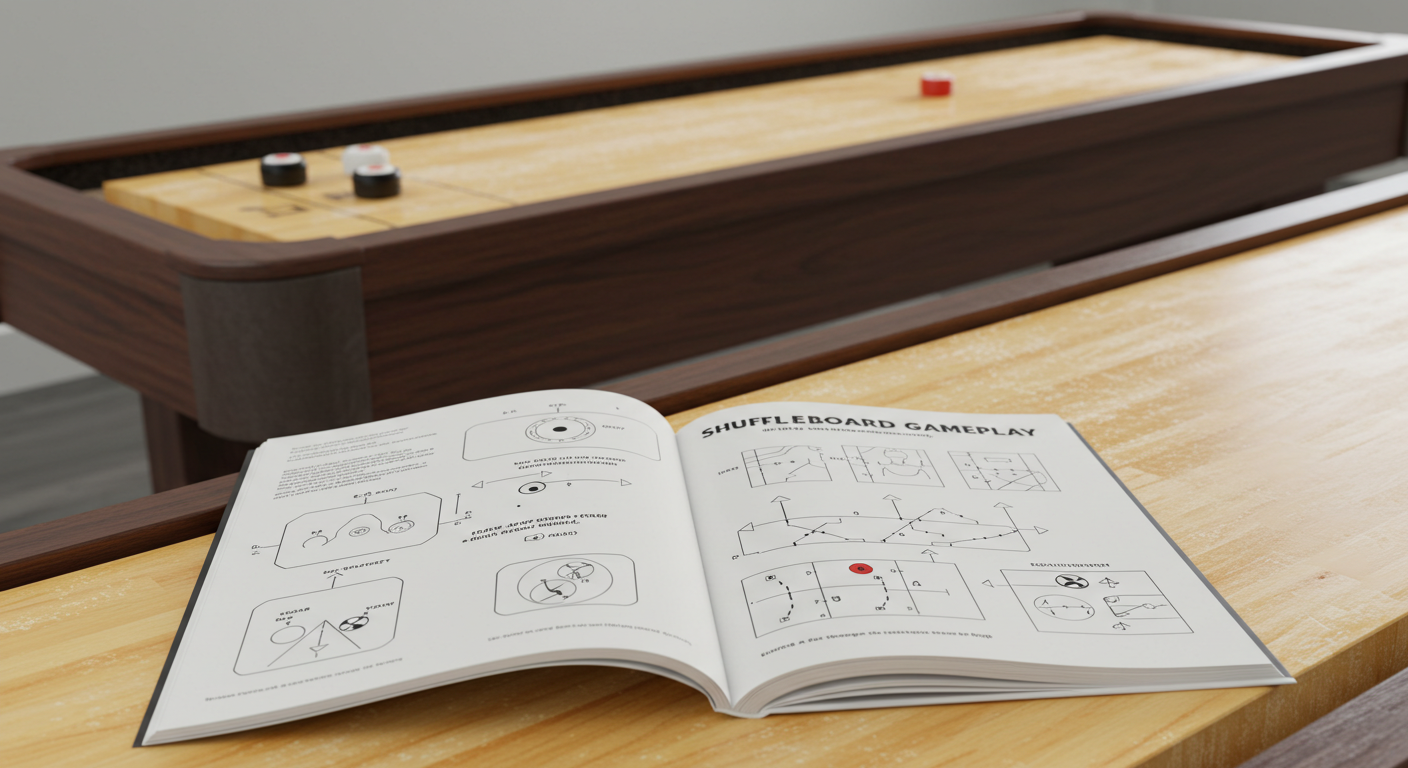
Shuffleboard isn’t just a nostalgic rec-room pastime—it’s a precision game of finesse, strategy, and fun that has stood the test of time. But beyond the classic version that many know and love, there’s a wide variety of shuffleboard game variations that can completely change how you play and enjoy the game.
In this guide, we’ll break down the top shuffleboard game variations, offering easy-to-follow instructions and tips so you can play like a pro—whether you're a total beginner or looking to shake up your next game night.
Let’s start at the roots—classic shuffleboard. It’s the version most people are familiar with, and it’s a perfect blend of skill, strategy, and a little bit of luck. Whether you’re at a bar, in a rec room, or just setting up a friendly tournament at home, classic shuffleboard is where the fun begins.

So how do you actually play? It’s simple to learn but surprisingly tough to master—and that’s part of the appeal!
Pro Tip: If you're just getting started, don’t stress about fancy equipment. Any flat, well-maintained shuffleboard table will do the trick!

Here's a basic rundown to get you into the game:
The scoring setup is designed to reward precision—and occasionally, guts.
Here's how the points typically break down:
Important: The puck must be completely over the scoring line to count for the higher zone. If it’s touching the line at all? It scores the lower number.
Classic shuffleboard can be played to 15 or 21 points—or whatever you and your crew agree on. The beauty of the game is how customizable it is. Just want a short match? Play to 11. Going for epic bragging rights? Stretch it to 50.
Honestly, it’s the simplicity. The rules are easy to grasp, but the gameplay itself becomes a dance of angles, strategy, and momentum. There’s real satisfaction in the thunk of a well-placed puck or the drama of knocking your opponent off the board in the final round.
Plus, it's wildly social.
If you're someone who enjoys games like bocce, curling, or even chess (yep!), shuffleboard taps into that same part of your brain. It’s all about timing, precision, and reading your opponent.
🔗 Check out our full breakdown of shuffleboard table rules & gameplay for in-depth strategies, variations, and equipment tips.
If classic shuffleboard is about finesse and accuracy, Knock Off turns up the intensity. It's more competitive, more strategic—and, honestly, more fun when you want to go head-to-head and not just aim for the high score but disrupt your opponent while doing it!

Think of it like shuffleboard meets bumper cars. You’re not just trying to place your puck—you’re trying to dominate the board. Every shot is a mix of offense and defense, and the stakes get higher with each round.
Let’s walk you through how to play:
Here’s where Knock Off really gets its name:
What makes Knock Off exciting is how interactive it is. You can launch your puck to knock your rival out of the 3-point zone, block them from scoring, or sneak one into a scoring spot they overlooked. Every move counts, and every shot can change the round completely.
Tip from experience: Don’t just aim for the highest zone every time. Sometimes the smartest move is knocking your opponent out of position—even if it means scoring less yourself. That’s how Knock Off is won.
Scoring in Knock Off uses the same zones as classic shuffleboard (1, 2, 3... and that sweet 4-point "hanger" if you can pull it off). But here’s the catch: only one player or team scores per round, and it’s the one with the furthest puck down the board.

Here’s how it works, step by step:
Warning: Going aggressive too early can backfire. One bad knock could send your own puck flying off the table. Play smart, not just hard.
Knock Off is fast-paced, interactive, and full of drama. One minute you’re leading with a clean 3-point shot, and the next your puck’s flying off the edge because your buddy decided to go full demolition mode. It’s loud. It’s competitive. It’s addictive.
Here’s why players keep coming back to Knock Off:
If you’re introducing new players to shuffleboard or want to spice up your regular game night, Knock Off is a fantastic variation to try. Easy to learn, hard to master, and ridiculously satisfying when you pull off the perfect shot.
Want to up your Knock Off game? Focus on mastering angles. The table’s edges and slick surface create bounce and slide patterns you can use to your advantage.
If you're looking for a shuffleboard variation that cranks up the challenge, look no further than Horse Collar. This version is all about precision, power, and knowing exactly where to place your shots. It’s less about knocking your opponent out of the way and more about perfecting your aim under pressure.
I’ll be honest—Horse Collar isn’t for the faint of heart. It’s high-scoring, high-risk, and crazy satisfying when you pull it off. But the best part? It can be played solo or with a friend, making it great for practice or competitive matchups.
Let’s break it down!
Horse Collar is played in frames, and each frame is a test of skill. In most versions, one player throws all 8 pucks in a single turn. Sounds easy? Not quite.
To actually score for a frame, you need to hit a specific target:
Miss that combo? Zero points for the round. Yep, even if you scored 25. Brutal? A little. But also what makes this game so addictive.
Tip: Don’t waste your first few pucks just warming up—every single shot counts in Horse Collar. Try to bank a few 3s early to take the pressure off.
Scoring is based on the same zone layout as traditional shuffleboard, but the twist is how it’s tallied:
Here's the key difference:
In Horse Collar, your score for the frame only counts if you hit the 26-point threshold and have at least one puck in the 3-point zone or hanging off the edge. Miss either condition? Your score gets wiped for that frame.
Let’s walk through a quick example:
🔹 You land four pucks—two in zone 2, one in zone 3, and one hanger.
🔹 That gives you 2 + 2 + 3 + 4 = 11 points (from just four pucks!)
🔹 You still have four more shots—if you hit 26+ total and have at least that 3-pointer or hanger, you bank the score.
But if you end up with, say, 25 points and no 3s or hangers? Zero. 😬
Horse Collar is usually played until a player reaches 51 or 100 points, depending on how long you want the game to last. Competitive players often go to 100, while casual matchups might stick with 51 for a quicker session.
Fun twist: Play to 51 in early rounds, then switch to 100 once everyone’s warmed up. It keeps things fresh and adds a new layer of pressure!
It’s not just about scoring—it’s about consistency, pressure, and knowing how to recover from a miss. You don’t just aim to score, you aim to survive each round.

Here’s why I love introducing people to this variation:
If you're already comfortable with classic shuffleboard or Knock Off, Horse Collar is a fantastic next step. It challenges you to level up your skills and makes each frame feel like a mini mission.
Want to boost your Horse Collar performance? Focus on your last two pucks. Treat them like tie-breakers—use them to lock in a hanger or bounce a puck into zone 3.
Shuffleboard 21 takes the traditional game and adds a delicious twist: not only do you need to score points—you need to land on exactly 21. Hit that number and you win. Go over it? Boom—you’re busted and dropped back to your previous total. It’s a little like blackjack meets shuffleboard… and trust me, it’s way more suspenseful than it sounds!

This version adds a layer of tension, strategy, and risk that even seasoned shuffleboard players find exciting. It’s one of my go-to variations when I want to shake things up.
We’ve watched players go from 20 to zero because they pushed too hard for that final point. So yeah… this game keeps you on your toes!
The scoring zones are exactly the same as classic shuffleboard—but the way you use them feels different.
Sounds easy, right? Not so fast. As the game progresses and scores climb, it becomes way harder to play safe. Every decision starts to feel like a gamble.
Let me show you an example.
Let’s say you’re sitting at 19 points. You’ve got one puck left. Aiming for 2 points feels perfect, right? But what if you miss and slide into the 3-point zone? You’d jump to 22—and bust! Back to 19 you go, and your opponent now has a golden opportunity to win.
So now you’re stuck thinking:
It’s these little choices that make Shuffleboard 21 so much more than just sliding pucks.
Out of all the variations, this one might be the best for game night drama. It creates tension. It forces players to slow down, think through their options, and balance calculated risk with smart defense. And when someone lands the winning point? It feels earned.

Here’s why you’ll love it:
Pro Tip: Once you hit 17 or 18 points, your strategy should change. Don’t just aim for high-value zones—play the math. Sometimes, the 1-point shot is the smartest move you’ll make all night.
Let’s keep it practical. Here are some tips that’ll help you play smarter (and win more):
🔗 Check out our full guide to Shuffleboard Rules & Gameplay to explore other scoring formats, pro techniques, and more winning strategies.
If you’ve ever played mini-golf and thought, "I wish I could do this indoors without a windmill in the way," then you're going to love Shuffleboard Golf. It’s creative. It’s strategic. And it brings a fun twist to your shuffleboard table by borrowing some of the best parts of golf—hole-based scoring, aiming challenges, and a big reward for precision over power.

The best part? You don’t need any extra equipment. Just a table, some imagination, and a willingness to get a little competitive!
Here’s the idea: Instead of scoring by zones like in traditional shuffleboard, each round becomes a "hole", just like in golf. Your goal? Land your puck in the designated target area using as few shots as possible.
Every hole can be different. You might start off easy—“Hole 1 is zone 1”—and gradually increase the difficulty. Maybe by hole 5, you’re trying to land in a tiny corner or pull off a bank shot.
Let’s walk through how it works:
Pro tip: Try starting with 6 to 9 holes for a casual game. Want a full “18-hole” experience? Go for it—it makes for an epic game night.
The scoring is straight from the golf playbook: the fewest strokes wins.
Each shot is like a swing in golf. You keep shooting the same puck (or a new one, depending on your house rules) until you land in the target zone. Once you do, count your total number of shots for that “hole” and move to the next one.
You can even spice things up by assigning par values:
This gives players something to aim for—and, let’s be honest, it makes bragging rights even sweeter.
Want to make things even more realistic? Add “hazards” by creating no-play zones or penalties if your puck lands in the wrong area. Just like sand traps or water in golf—only much more forgiving!
It’s seriously underrated. Shuffleboard Golf is creative, unpredictable, and a total crowd-pleaser. You don’t need to be an expert to have fun, and it opens the door to experimentation, especially if you’re playing with friends or kids.

Here’s why I always recommend giving it a shot:
Pro tip: Keep a small whiteboard nearby to track scores like a real golf card. It adds to the experience and lets you talk trash politely.
Every shuffleboard variation has its own unique rhythm and mindset. Whether you're on the offense, playing defense, or just trying not to send your puck flying off the edge (we’ve all done it!), understanding the strategy behind each game can totally change how you play—and how often you win!

Let’s break down how to think differently depending on the variation:
This is where defense really shines. Your job? Knock your opponent’s pucks off the board while keeping yours safe and sound.
Tips to own Knock Off:
"There’s no better feeling than sending your rival’s perfect 3-point shot flying into oblivion with your last puck!"
This game is all about hitting those high-value zones at the end of the board. It rewards accuracy more than brute force.
Winning strategies:
Here, it’s all about playing the numbers. The goal is to hit 21 exactly, so every puck is a tiny math problem waiting to be solved.
To avoid busting and losing progress:
Just like real golf, Shuffleboard Golf rewards patience and touch over flash.
Tips to improve:
You don’t need a coach or a shuffleboard academy to level up. Just a little intention every time you play goes a long way. Trust me—your future self (and your win record) will thank you!

Here are a few simple ways to get better at every variation:
It’s the most important skill in the game. Different tables have different speeds—some are slick and fast, others a little sticky or slow.
"Even just 10 minutes of casual practice before a match can dial in your touch for the rest of the night!"
Before you slide that puck, take a breath. Look at the target. Picture the path. Plan for where your puck might land—or bounce.
Even casual games can be learning opportunities. Challenge yourself to try new shots, practice setups, or experiment with game plans.
It sounds boring, but it matters—a dusty or dirty shuffleboard surface messes up your shots. Think of it like trying to bowl on a floor covered in crumbs. Not fun. Not fair. Not accurate.
Want more game improvement tips or gear advice?
🔗 Check out our Guide to Shuffleboard Table Maintenance & Care to keep your table game-ready all year round.
Shuffleboard isn’t just one game—it’s a whole world of games wrapped into one smooth-gliding, puck-sliding experience! Whether you’re playing at a casual pace with friends or getting laser-focused on strategy, there’s a variation that fits your vibe. Some are quick and playful, others intense and competitive—but all of them bring something fun (and a little addictive) to your game nights.
You don’t have to be an expert to start, either. That’s the beauty of it! Shuffleboard is approachable for beginners and surprisingly deep for competitive players. With just a few rounds of Knock Off, Horse Collar, or even Shuffleboard Golf, you’ll start to see the nuances. The tension. The satisfaction of a well-placed puck. It’s all there.
And here's the best part: every game feels just a little bit different. That means you can mix things up anytime. Stuck in a classic game rut? Try Shuffleboard 21. Want something a little wild for a group gathering? Shuffleboard Golf is calling your name!
Don’t just stop at one game mode—try them all! You might love the strategic punch of Knock Off, or maybe you’ll discover you’re a finesse player who thrives in Horse Collar. There’s no wrong way to play—as long as you’re having a good time.
Here’s how to keep things fresh:
And remember, there’s no pressure to master them all at once. Just slide in, experiment, and enjoy the ride. You'll get better with each game, even when it feels like you’re just goofing around. That’s the magic of it!
We’ve rounded up our favorite tables—whether you’re setting up a slick rec room or carving out a corner of the living room for friendly battles. Explore our top-rated shuffleboard tables built for every skill level and space.

Meryam Shakoor




placeholder